
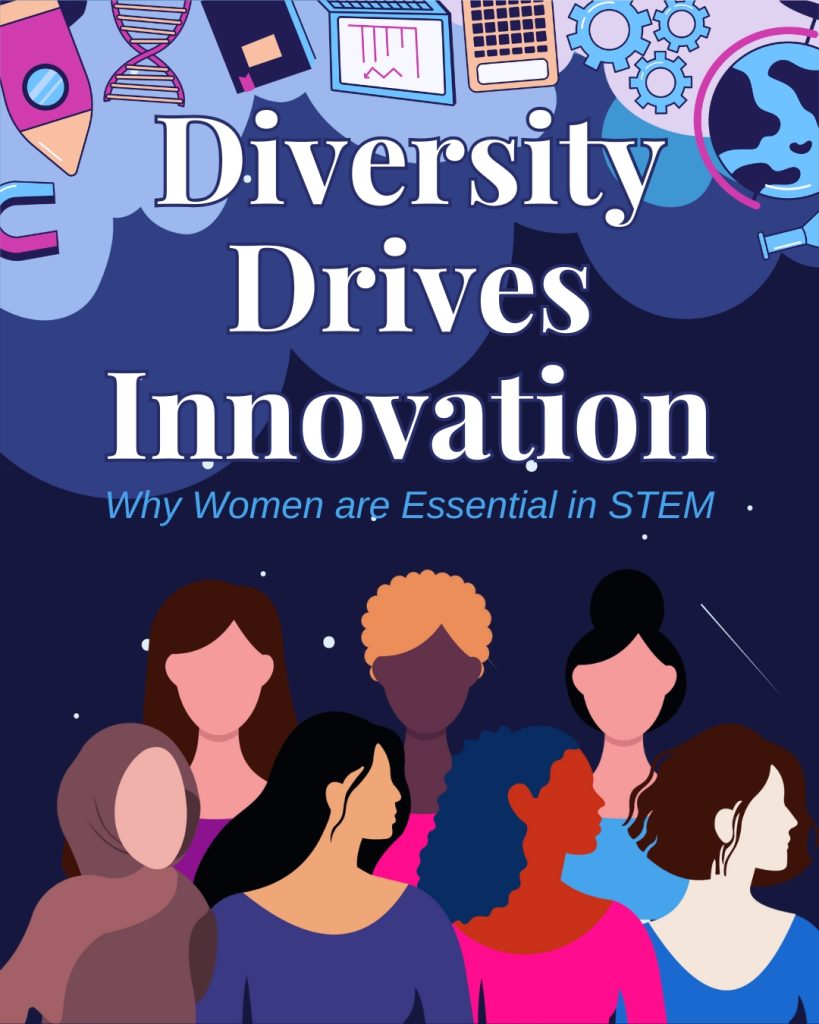
In the world of science, technology, engineering, and mathematics (STEM), diversity is essential鈥攏ot only for fairness and equality but also for innovation and progress. Despite significant advancements, women remain underrepresented in STEM fields worldwide. Supporting and increasing the participation of women in STEM careers has become a priority for educators, organizations, and industries alike. Here鈥檚 why their presence is crucial and the impact it has on the field and society as a whole.

Innovation thrives in an environment where diverse voices contribute unique ideas and insights. Women bring perspectives shaped by their experiences, cultures, and backgrounds that enrich problem-solving and creativity in STEM. Research has shown that teams with balanced gender representation perform better, leading to more robust solutions and groundbreaking advancements. When women participate, they introduce new angles and approaches that enhance STEM鈥檚 ability to address complex issues across industries like healthcare, engineering, and environmental science.

Historically, a lack of female representation in STEM has led to biases in research and development. From medical studies conducted without considering women鈥檚 health needs to product designs that ignore female users鈥� preferences, the consequences of a male-dominated STEM landscape can be problematic. By including more women, STEM fields can better design inclusive products, develop comprehensive research studies, and implement solutions that benefit everyone.

When young girls see women excelling in STEM, it sends a powerful message that these fields are not only for men but are open and attainable for everyone. Representation matters: seeing role models who share similar backgrounds helps girls envision themselves as scientists, engineers, or coders. As more women make their mark in STEM, they create a ripple effect that inspires the next generation to pursue these fields with confidence.

Increasing the number of women in STEM also boosts economic growth. Women represent half of the global population, and their talents in STEM fields are essential for addressing labor shortages, especially in high-demand industries like information technology and engineering. Encouraging women to enter STEM careers can help fill critical skill gaps, driving innovation and increasing productivity across economies.
听

Women in STEM are powerful agents for breaking down stereotypes and challenging traditional gender roles. Historically, stereotypes have discouraged girls from pursuing STEM, with expectations that certain fields are 鈥渂etter suited鈥� for men. The continued success of women in STEM disrupts these outdated norms and encourages a society where skills and interests are valued over gender.
Supporting Women in STEM: How We Can Make a Difference
To foster a supportive environment for women in STEM, educational institutions, organizations, and individuals need to take proactive steps. Schools can provide early exposure to STEM subjects, mentoring programs, and scholarships specifically aimed at girls. Companies can promote inclusive hiring practices, support professional development for women, and create family-friendly workplace policies. By making these changes, we can build a future where everyone鈥攔egardless of gender鈥攃an thrive in STEM.
Having women in STEM is more than a matter of equality; it鈥檚 essential for a thriving, innovative, and inclusive society. Encouraging women鈥檚 participation in these fields benefits everyone by fostering diverse thinking, expanding economic opportunities, and creating a world where everyone can contribute to the solutions of tomorrow.
Learn about the science and technology programs available at 久久视频 below, and apply !
Master of Business Administration with a specialization in Information Management
Master of Science in Nursing with a specialization in Informatics